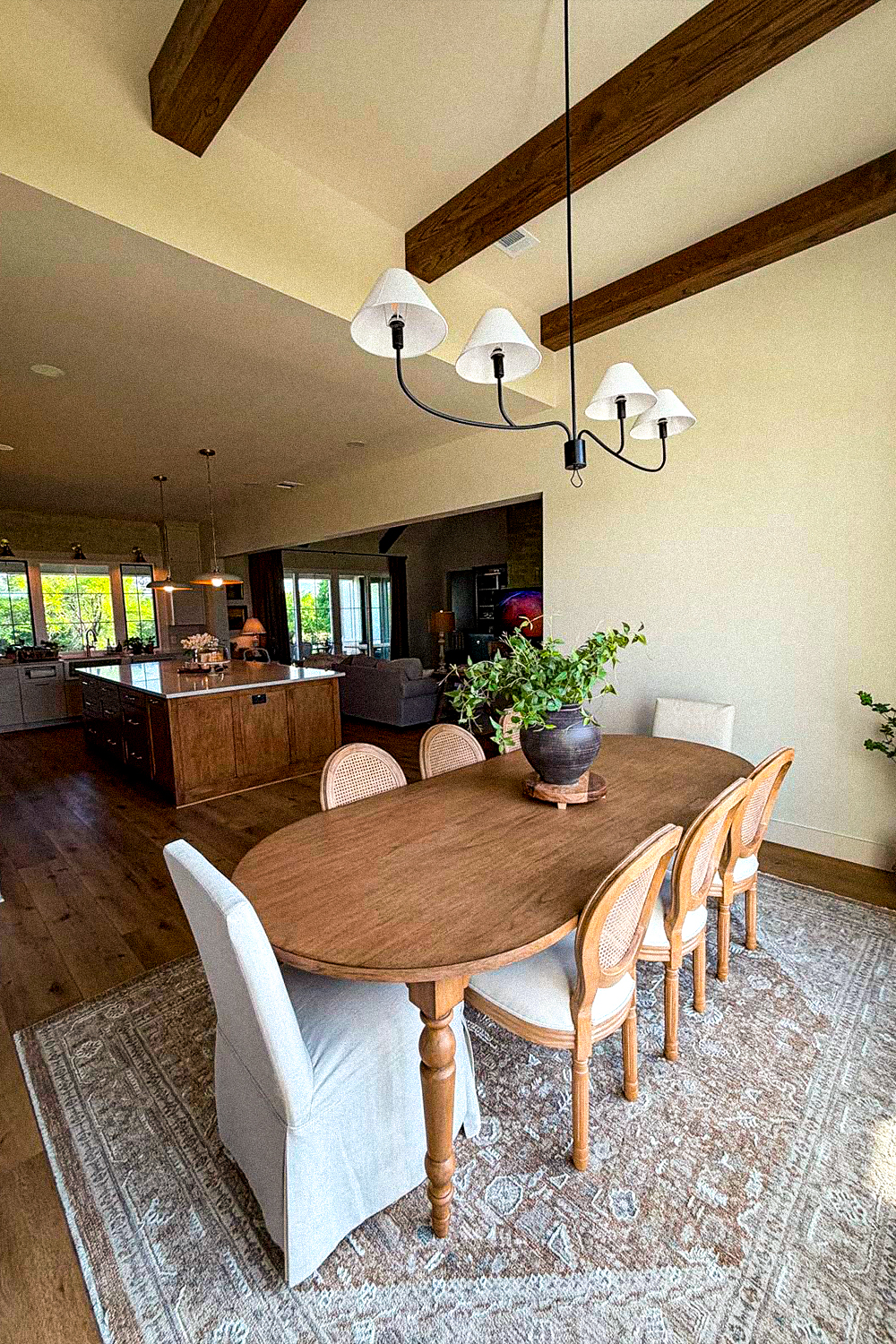
oval wood dining table with french cane back chairs under exposed beams
An oval table does one thing a rectangle cannot in an open plan room: it has no corners to walk into on the way to the kitchen. This one runs long, and the chairs are what keep it relaxed. Cane backs down the sides, slipcovers at the ends, dark beams overhead and a faded rug underneath. Here is the room piece by piece — six that earned a place, and one that did not.
Some links here are affiliate links. A small commission may be earned on a
qualifying purchase, at no extra cost to the buyer. It does not change what gets
picked — the near-misses still get named.
The room as it stands: oval wood table, french cane back chairs, slipcovered end chairs, a faded vintage rug, a black shaded chandelier and olive branches in a stone vase, open to the kitchen.
why this room works
Two chair styles, one table. The cane back chairs along the sides are light and see-through, so the table stays in view from the kitchen. The slipcovered chairs at the ends are soft and solid. That mix is what stops a long table from looking like a boardroom.
Dark accents sit high and low. Dark beams on the ceiling, a black chandelier, a dark stone vase on the table. Everything in between — wood, cane, linen, rug — stays light and warm. The eye moves from ceiling to table and stops there.
The oval shape follows the path. In an open plan room the dining table sits in the walkway between kitchen and living area. Rounded ends make that walk easier, and the long sides still take plenty of chairs.
The order matters when putting it together. Rug first, long enough that the end chairs pulled out still sit on it. Table second. Chandelier last, centred on the table, not on the beams.
oval wood dining table, turned legs
The piece the room is built around. Oval, so no sharp corners on the kitchen side. Turned legs and a warm mid-tone finish keep it from reading modern next to the cane chairs.
The turned legs sit in from the ends. Worth checking that the end chairs clear them — on some oval tables the leg lands right where the knees go.
french cane back dining chair, upholstered seat
Oval cane back, carved wood frame, cream upholstered seat. The cane lets light through, so a full row along one side still looks airy. The wood tone sits close to the table, so chairs and table read as one set without matching exactly.
Cream seats at a dining table. Worth a fabric that wipes clean, or a seat that lifts out.
slipcovered parsons dining chair, light grey
Tall back, full skirt to the floor, light grey cover. Two of these at the ends soften the whole table. They are the only fully solid chairs in the room, and they sit where solid matters least — at the ends, out of the walkway.
Slipcovers are the whole reason these work at a dining table. Covers that come off and go in the wash — worth checking before anything else.
faded vintage-style area rug, low pile
Muted grey and rose, a traditional pattern worn back to almost nothing. It adds pattern under the table without competing with the cane. Low pile, so chairs slide out instead of catching.
Sized to the chairs pulled out, not pushed in. On a long table that means a long rug — the size that usually gets bought one step too small.
black chandelier with white fabric shades
Thin black arms, small white shades, hung on a long drop from a vaulted ceiling. The black ties it to the beams above. The white shades keep the light soft at dinner instead of glaring on the wood.
The long drop is on purpose. Under a vaulted ceiling, a chandelier hung too high floats in empty space and lights nothing.
dark stone vase with olive branches
Round dark vase on a small wood riser, loose olive branches. One tall piece in the middle of the table, nothing else. The dark stone repeats the beams and the chandelier at table height.
One piece, placed in the middle, and moved off at dinner. A centrepiece this tall blocks the view across the table.
almost picked
the end chairs that did not make it
A full set of matching cane back chairs, ends included, was the obvious first choice. One style all the way around, clean and easy. It lost for one reason: cane at the ends turned a long table into two rows of seats facing each other, stiff and formal. Swapping the two end chairs for slipcovers broke the line and made the table feel like somewhere to stay after dinner. The trade is two covers to keep clean.
the short version
Oval table so the walkway has no corners. Cane down the sides, slipcovers at the ends. Dark accents high and low, everything between them light. Chandelier centred on the table, not the beams.